


I think I can speak for most of us in the community when I say that the Gregorian calendar year 2026 has started off with a bang. As I write to you, COMPAS blog readers, this Tuesday, February 17th, one morning after witnessing the appropriately themed “This is Culturally Inappropriate” Dave Chappelle comedy concert, I can’t help but think of his words from his latest Netflix special, The Unstoppable.
Yes, And: The Art of Belonging
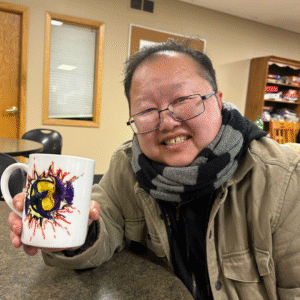
A woman walked into the Seward Community Support Program (CSP) & Drop-In Center, unhoused, visibly struggling, and tearful about her circumstances. While chatting with staff, she noticed people decorating ceramic dishes with colorful markers. “Wait, what’s going on here?” she asked. Soon, she was creating her own beautifully decorated plate.
This is what happens when art creates space for connection. People show up as themselves and discover they belong.
February 3, 2026
Radical, Resilient Hope: Inside Joe Davis’s Diaspora: On the Rise
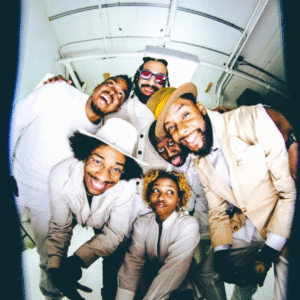
What does it mean to walk into a concert carrying the weight of the world and leave lighter, stronger, and ready for what comes next? Joe Davis knows. And with Diaspora: On the Rise (Sat, Feb 21, 7:00 pm at Northrop Memorial Auditorium), he’s designed an experience to do exactly that.
“I want people to walk out of the auditorium feeling a lot better than they did when they came in,” he explains.
It’s an ambitious promise, but Joe isn’t new to the work of transformation.
January 31, 2026
Your Brain Needs Art Like Your Body Needs Sleep
On Friday nights, neuroscientist Susan Magsamen pushes the coffee table aside and dances in her living room with her husband. They are, by her own admission, not great dancers. They do it anyway because it makes them feel more alive.
Her research helps explain why. As co‑author of Your Brain on Art and director of the International Arts + Mind Lab at Johns Hopkins, she has spent years studying what happens when we sing, draw, move, or listen. Older adults who engage in the arts even a few times a year have a lower risk of dying over the next decade than those who don’t. Twenty to forty‑five minutes of creative activity can lower cortisol, our main stress hormone, and support better mental health and quality of life.
January 29, 2026
Creativity, Healing, and the Path Forward
The future will not arrive on its own. It will take shape through what we choose to protect, whose humanity we recognize, and which stories we carry forward. It will be shaped by how well we honor connection, and by how creativity helps us recognize ourselves as part of the same narrative, bound to one another through a shared heartbeat.
COMPAS remains committed to this work. For more than fifty years, we have walked alongside our communities. We intend to be here with them through this moment and beyond, using creativity to heal and help imagine what comes next
January 27, 2026
Standing With Our Community
This is a heavy and unsettling time in our community.
Many of us are moving through these days with grief, anger, and uncertainty.
We want to say simply: we see you, and we feel this moment alongside you.
January 8, 2026
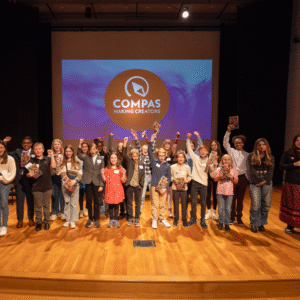
Literary Arts Power Student Self-Discovery
There are moments in a classroom that every teacher waits for, so alive they feel magical. Like when a student who has been quiet all year suddenly raises a hand to share a poem, or when the student who “hates writing” asks to read their story out loud.
January 8, 2026
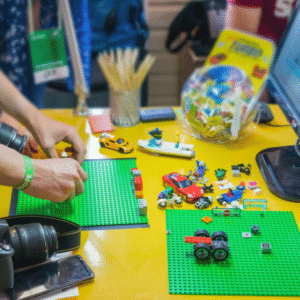
Ideas in Motion: How Stop Motion Animation Lit Up a Minnesota Classroom
There are moments in a classroom when the power of creativity becomes visible. The energy feels electric as students begin to build something of their own.
That same spark filled the fourth- and fifth-grade classrooms at Brandon–Evansville Elementary recently when COMPAS Teaching Artist Deacon Warner arrived to teach stop-motion animation.
December 18, 2025


